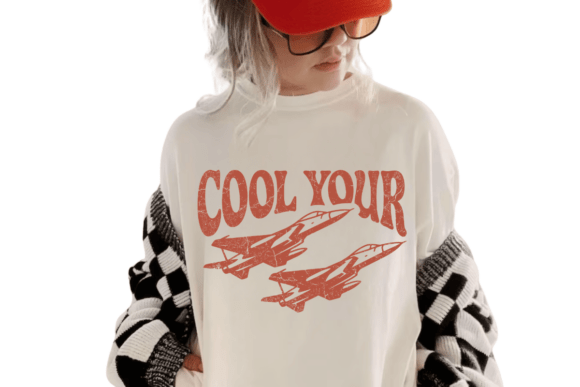
Cool Your Jets Shirt: Crafting Hilarious Apparel and Decor
There’s a certain charm to a well-timed, slightly sarcastic phrase printed on a t-shirt. It’s more than just clothing; it’s a wearable mood, a conversation starter, and a perfect little slice of personality. The "Cool Your Jets" design taps into that energy perfectly. It’s playful, a bit cheeky, and universally relatable—whether you’re telling a friend to calm down or just embracing your own slightly frazzled state. But this kind of design isn’t just for apparel anymore. Its clean, graphic nature makes it a surprisingly versatile asset for a whole range of creative and even commercial projects, from apparel to home decor and beyond.
More Than a Shirt: The Anatomy of a Great Design
What makes a design like "Cool Your Jets" work so well? First, it’s the typography. The font choice is crucial—it’s likely bold, readable, and infused with personality, whether that’s a retro vibe, a clean modern sans-serif, or a playful script. This isn't just about legibility; it's about conveying tone. The right typeface can make a phrase feel humorous, urgent, or laid-back. Second, the composition is simple and balanced. The text is the hero, often accompanied by minimal graphic elements like a retro airplane or a simple underline, which gives it a vintage or classic feel without cluttering the message. This simplicity is its superpower. It translates seamlessly across different mediums because it’s not overly complex. A strong visual identity, even for a single humorous phrase, relies on this kind of thoughtful design foundation. It’s a lesson in how modern typography and a focused concept can create something immediately engaging and memorable.
From Digital File to Physical Product: Your Project Toolkit
This is where the practical magic happens. When you download a design package like this, you’re not just getting a picture of a shirt. You’re getting a toolkit. The included files—SVG for cutting machines, high-resolution PNG for sublimation, DXF for Silhouette users, and EPS for vector editing—are the building blocks for your creativity. Think of an SVG file as a set of precise instructions for your Cricut or Silhouette machine. It allows you to cut the design from vinyl with perfect, clean edges. The 300 DPI PNG with a transparent background is a crafter’s best friend. You can layer it onto any digital mockup, use it for print-on-demand services, or print it directly onto transfer paper for fabric projects. The possibilities extend far beyond a single t-shirt. Consider these applications:
- Apparel & Accessories: Classic tees, hoodies, tote bags, and even hats. The design’s simplicity ensures it looks great on various garment colors.
- Home Decor & Signage: This is where it gets interesting. Use the SVG to create a stencil for a wooden sign for your home office or garage. Apply the design as a vinyl decal to a ceramic mug, a water bottle, or a laptop. It transforms a mundane object into a personalized statement piece.
- Paper Crafts & Marketing: The PNG file is perfect for scrapbooking layouts, greeting cards, or even quirky business cards for a creative studio. For small business owners, incorporating a fun, branded element like this into packaging inserts or thank-you notes can add a memorable, human touch that customers appreciate.
Building a Cohesive Brand with Playful Elements
For entrepreneurs and content creators, consistency is everything. A design asset like "Cool Your Jets" can be a cornerstone of a playful, approachable brand identity. Imagine using it across your social media graphics as a recurring theme for "Take a Break" or "Motivation Monday" posts. It could be the header image for a blog category on productivity or stress relief. The key is strategic integration. You wouldn’t plaster it on every single piece of collateral, but using it as an accent reinforces a brand voice that doesn’t take itself too seriously. It shows personality. When selecting any design asset for branding, consider its scalability. Will it look just as good tiny on a favicon as it does large on a poster? The clean lines of this type of design typically hold up well. It’s also worth thinking about font pairing. If you’re using the "Cool Your Jets" typography in a larger project, what other fonts complement it? A simple, neutral sans-serif for body text often lets the featured display font shine without creating visual chaos.
Practical Advice for Seamless Execution
Before you dive in, a few practical considerations will save you time and frustration. First, always check file compatibility. Confirm that your software or machine can handle the file formats provided. Silhouette Studio Basic Edition, for example, requires the DXF file, not the SVG. Second, test your materials. If you’re using vinyl, do a small test cut to ensure your blade depth and pressure are correct for that specific material. For sublimation, a test print on paper first can help you check color and placement. Third, consider commercial licensing. This is non-negotiable if you plan to sell items featuring the design. The license terms should clearly state whether commercial use is permitted and under what conditions (e.g., up to a certain number of units). Respect the original creator’s work. Finally, think about the context. A design that’s hilarious on a shirt at a casual gathering might need a more subtle application in a professional setting. Use your judgment to match the project’s tone. The goal is to enhance, not overwhelm.
Ultimately, a well-crafted design like "Cool Your Jets" is a versatile starting point. It’s a spark. Whether you’re a hobbyist looking to make a gift that gets a laugh, a small business owner adding a personal touch to your packaging, or a designer sourcing assets for a client project, its value lies in its adaptability and clear, communicative power. It reminds us that good design doesn’t have to be overly serious to be effective—it just needs to connect.